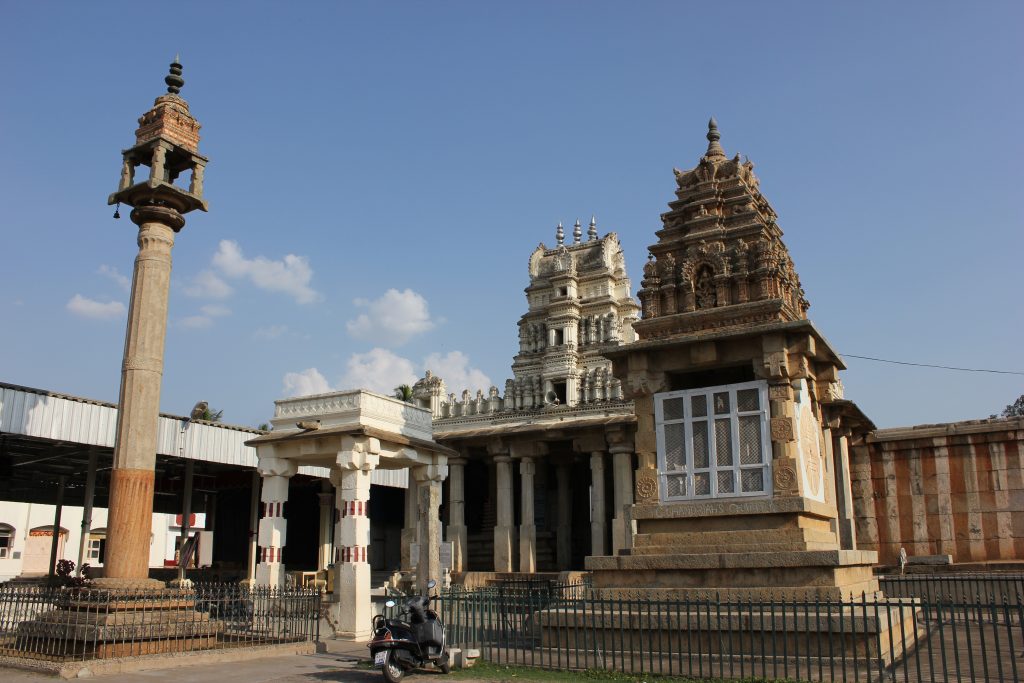
Among the large Jain basadis, Bhandari basadi too is one. Its dimension is 266 ft. X 78 ft. As the idols of 24 Tirthankaras are installed in the main pavilion, so it is also called ‘Choubis Tirthankar Basti’. It consists of a courtyard,a spacious stage and a quadrangle with a large door. It was built by Hulla, Bhandari of Hoysala King Narasingha(1), so it got to be called after its builder as ‘Bhandari Basti’. There is a Manastambha just before it, made out of massive stone. One inscription inside the temple records a major dispute between Vaishnav and Jain and its resolution by King Bukka of Vijayanagara Empire.
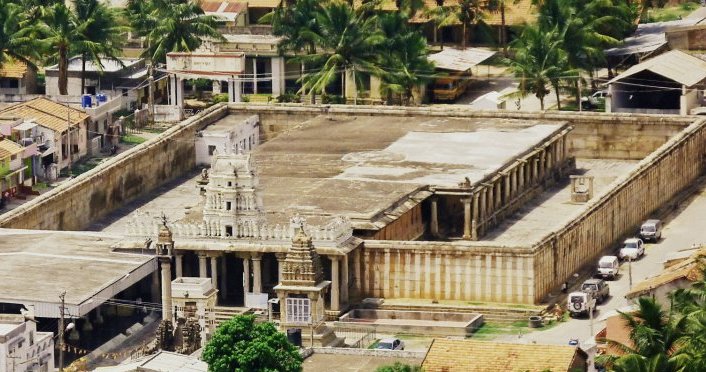
Bhandara Basadi is the largest temple in Shravanabelagola measuring 266 by 76 feet (81 by 23 m). The temple is dedicated to 24 Tirthankaras and is hence also known as Chaturvimsati Tirthankar Basadi. The garbhagriha houses 3 feet (0.91 m) idols of 24 Tirthankaras in kayotsarga posture with a ornate pedestal. There are idols of Padmavati and Brahmdev outside the garbhagriha. The central part of navaranga (hall) floor contains a 10 feet (3.0 m) monolithic slab which popular in Hoysala architecture.
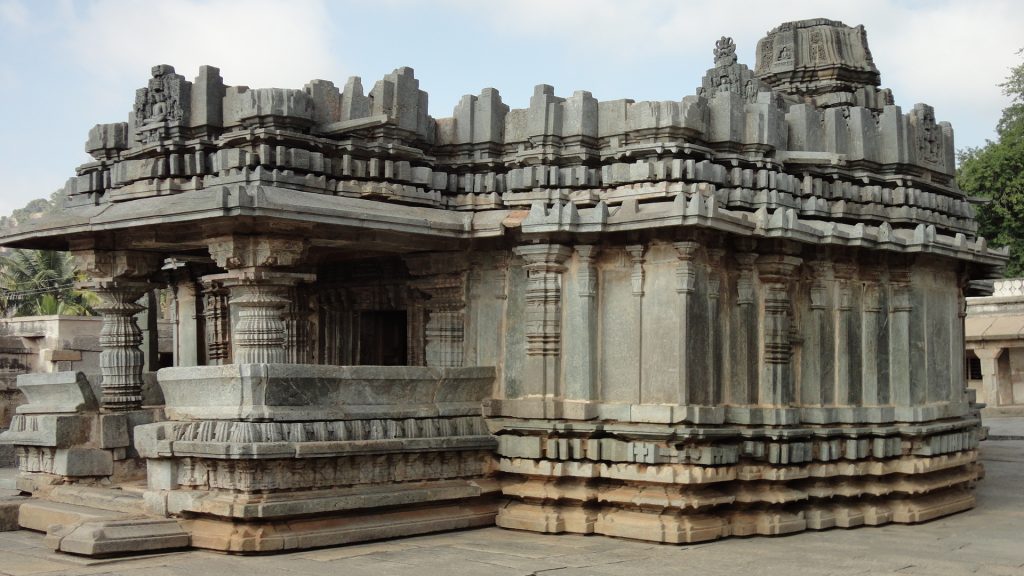
Akkana Basadi (lit, temple of the “elder sister”, basadi is also pronounced basti) is a Jain temple (basadi) built in 1181 A.D., during the rule of Hoysala empire King Veera Ballala II. The basadi was constructed by the devout Jain lady Achiyakka (also called Achala Devi), wife of Chandramouli, a Brahmin minister in the court of the Hoysala king. The main deity of the temple is the twenty-third Jain Tirthankar Parshwanath.The temple is protected as a monument of national importance by the Archaeological Survey of India. It is part of an Archaeological Survey of India Adarsh Smarak Monument along with other temples in the Shravanabelagola group of monuments.
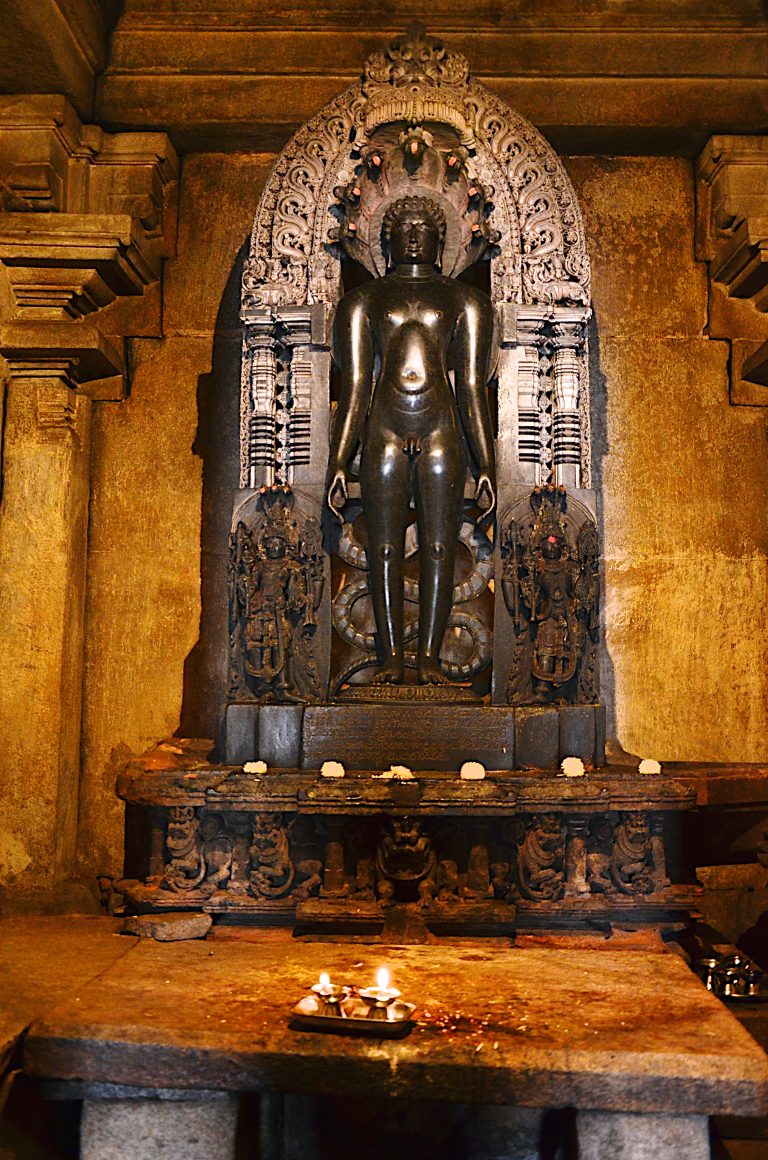
This is an exceptionally bright specimen of Hoysala architecture and is dedicated to Lord Parshwanath seated under a seven headed cobra, protected by Dharanendra and Padmavathi on its right and to left of the entrance door. The temple was built in dark-blue schist, planned in the shape of a ‘star’, it possesses typical bell-shaped pillars, ornate ceilings and door-ways. It was built by Achiyakka, wife of a Brahmin Minister named Chandramouli. Thus the name of the temple acquired its origin after its builder, and Akka is an abbreviation of her name.

 Vidyananda Nilaya, Near KSRTC Bus Stand, Shravanbelagola(Rural),
 demo@lorem.com
 333 444 555